BESS vs Solar: Why Businesses Need Both
Solar PV and BESS are different but complementary: solar generates electricity from sunlight, while BESS stores electricity and releases it when needed. Together they unlock deeper savings, flexibility and energy security.
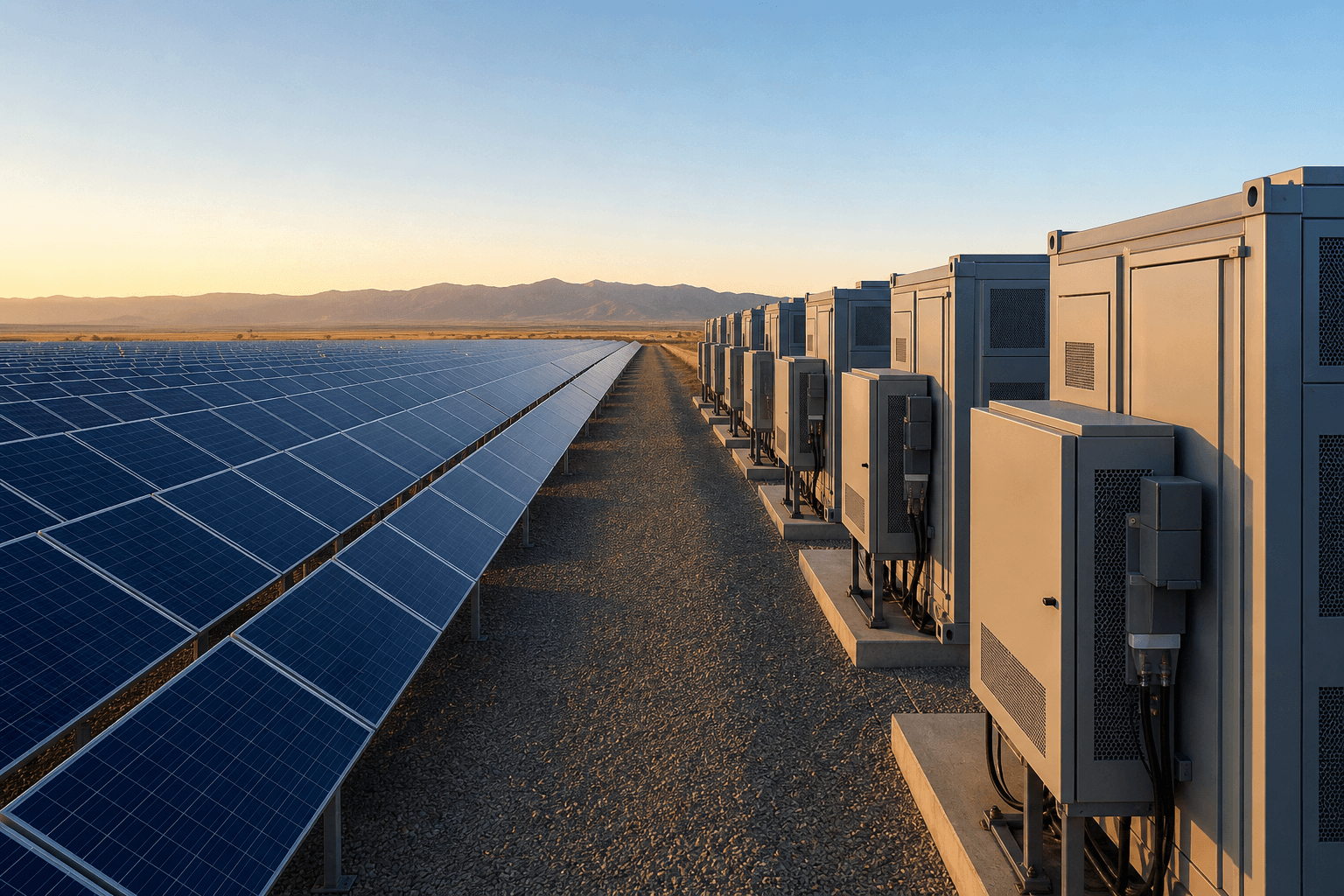
What solar does well
Solar PV helps companies generate clean electricity, reduce grid consumption, lower bills, improve ESG performance and use available rooftop or land space. For factories, warehouses and commercial buildings with good daytime consumption, solar can be a strong investment — but it only generates power when sunlight is available.

The limitation of solar alone
Solar generation is lower in the morning, peaks at midday and reduces in the evening, fluctuating with weather. This creates challenges:
- Excess solar during low-load periods
- Insufficient solar during peak demand
- No solar generation at night
- Limited control over when solar energy is used
- Potential grid-export limitations
- Reduced value if the site cannot consume all generation
What BESS adds to solar
BESS solves many of solar’s limitations by storing electricity and releasing it when needed. When solar generation exceeds demand, the BESS charges; when generation is low or demand is high, it discharges. This lets the business use more of its own solar energy instead of relying on the grid — and supports maximum demand peak shaving, which matters because demand charges can be a significant part of the bill.
Solar saves energy; BESS manages power
A simple way to understand the difference: solar reduces energy consumption from the grid (kWh), while BESS manages when power is used and how demand peaks are handled (kW). That is why the combination of solar + BESS can be more powerful than solar alone.
Why businesses need both
Energy cost is no longer only about how much electricity is used — it is also about when it is used and how demand is managed. Solar + BESS together can help businesses:
- Increase solar self-consumption
- Reduce maximum demand charges
- Improve energy resilience
- Avoid or delay grid infrastructure upgrades
- Support power expansion
- Reduce exposure to rising electricity costs
- Improve ESG reporting
- Create a more future-ready energy system
Frequently Asked Questions
BESS is not better than solar — it serves a different function. Solar generates electricity, while BESS stores and manages it.
Yes. BESS can work with the grid even without solar, especially for peak shaving and power management.
Combining solar with BESS allows businesses to store excess solar energy and use it when needed.
Yes. BESS can discharge during demand peaks to reduce maximum demand charges.
Related reading
Keep exploring — more from the Solunar Knowledge Centre:
Have a Solar + BESS project to discuss?
Solunar supports EPCC companies, developers and asset owners with technology, integration and O&M.