PCS, EMS & Architecture: The Brain, the Converter and the System Design
BESS performance is not only about the battery. Solunar designs and integrates the PCS, EMS and overall architecture that determine how a storage system charges, discharges, communicates, stays safe and delivers financial value.
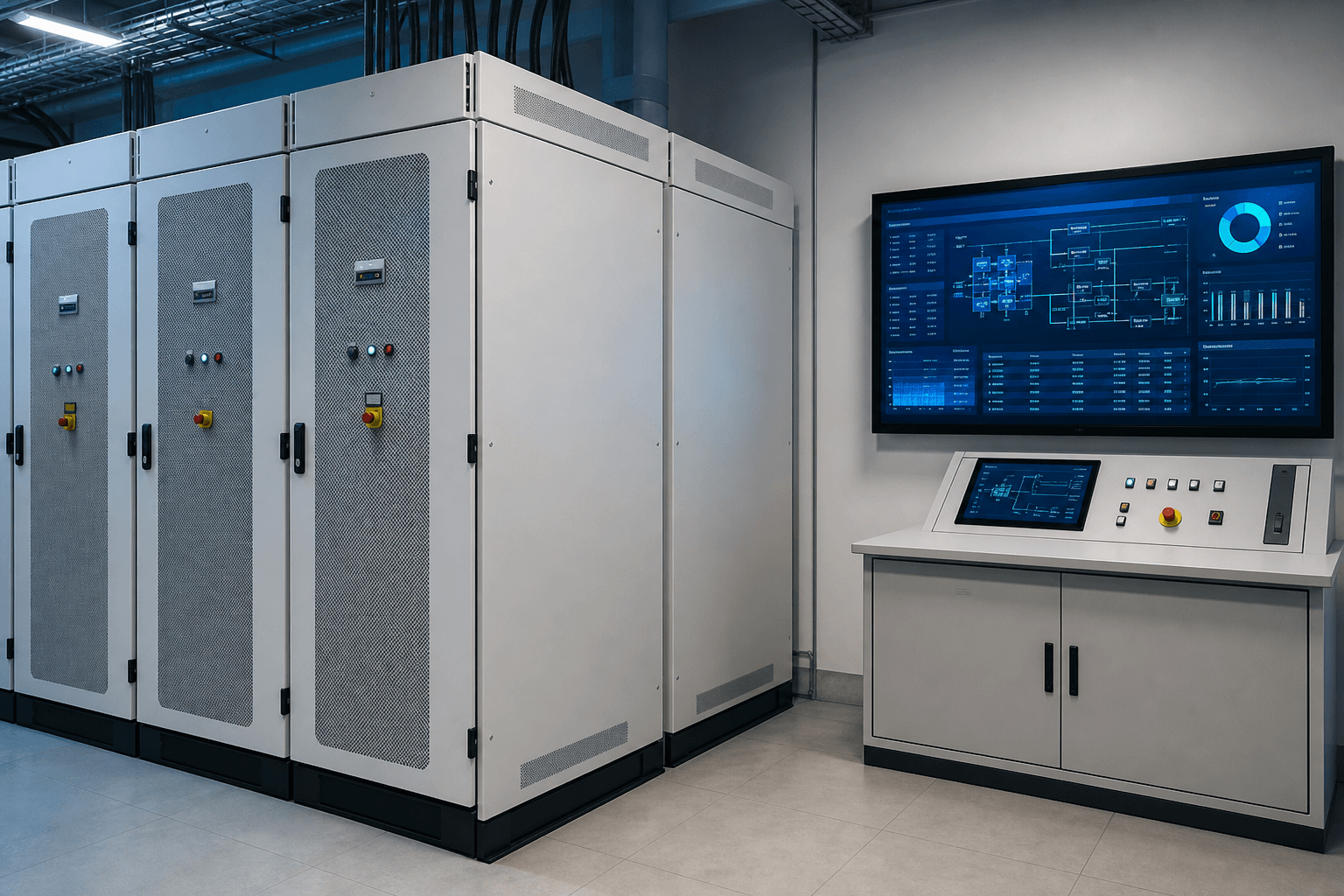
BESS performance is not only about the battery
Many people focus only on the battery brand. But in real projects, performance depends heavily on three critical elements: the PCS (Power Conversion System), the EMS (Energy Management System) and the overall system architecture.
Together, these decide how the BESS charges, discharges, communicates, protects itself, integrates with solar, connects to the grid and delivers financial value.
What is a PCS in a BESS?
The battery stores energy as DC power, while the grid and most electrical systems run on AC. The Power Conversion System converts power between DC and AC, allowing the battery to charge and discharge.
The PCS controls charging and discharging power, AC/DC conversion, grid synchronisation, power-factor and reactive-power support, voltage and frequency response, system response speed, protection response and communication with the EMS and battery.
What is an EMS in a BESS?
The Energy Management System is the control brain of the BESS. It decides when the battery charges, when it discharges, how much power it delivers and how it responds to changing load, solar generation and grid conditions.
The EMS manages peak shaving, solar charging, load shifting, energy arbitrage, battery dispatch, SOC management, protection limits, grid import/export limits, backup logic, remote monitoring, performance reporting and multi-device coordination. A BESS without a strong EMS strategy may not deliver the expected return.
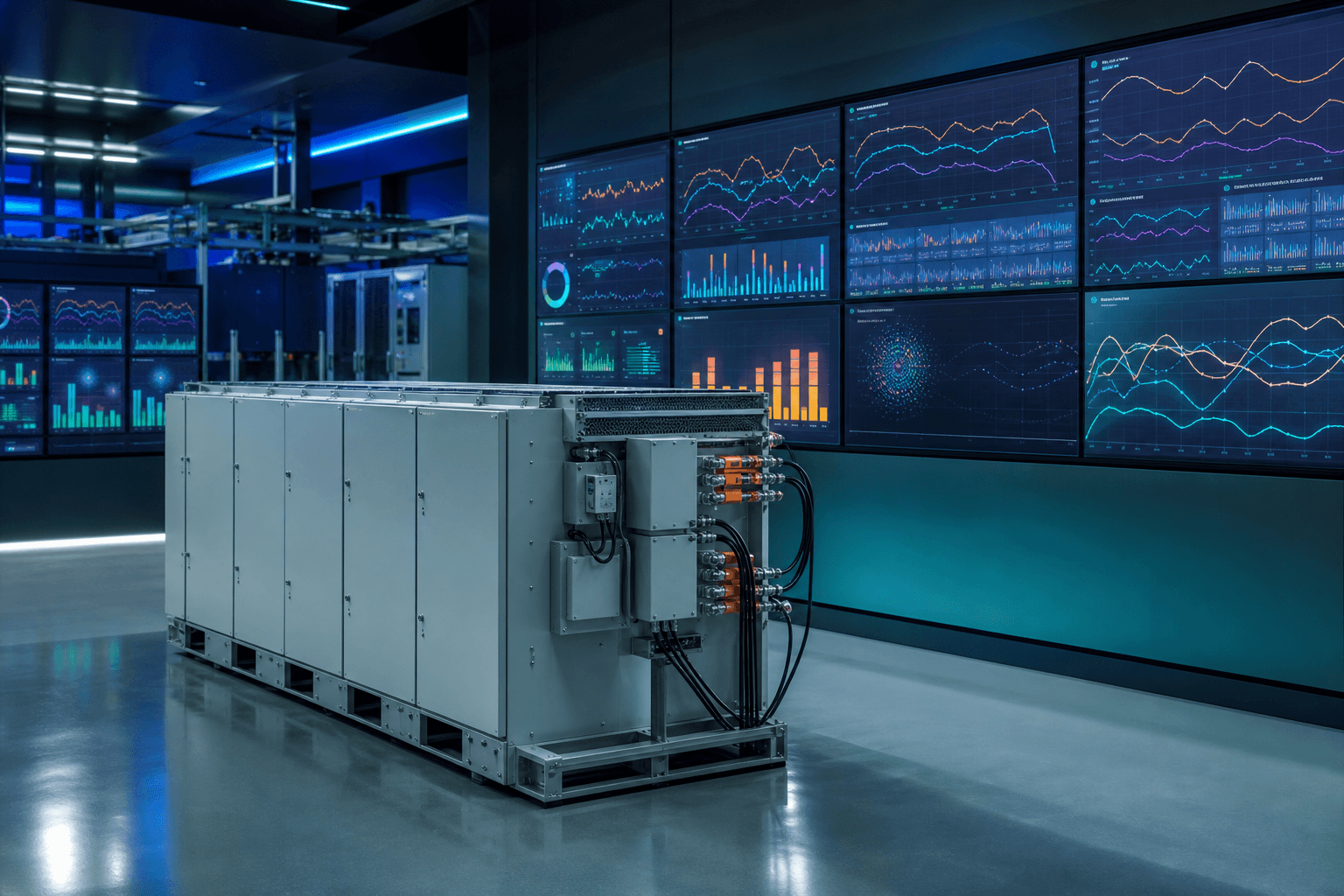
Why BESS architecture matters
Architecture is the full system design that connects the battery, PCS, EMS, solar PV, grid, transformer, switchgear, protection and monitoring. A well-designed architecture improves safety, availability, efficiency, grid compliance, future expansion, maintenance access, control accuracy, financial performance and long-term reliability.
A weak architecture can create hidden project risks even when the battery brand is strong.
AC-coupled vs DC-coupled architecture
The right approach depends on the project objective, site, tariff, grid requirement and commercial model.
| Aspect | AC-coupled | DC-coupled |
|---|---|---|
| Solar & battery connection | Joined on the AC side | Joined on the DC side before conversion |
| Best for | Retrofits and existing solar | New, purpose-built hybrid projects |
| Strength | Flexible, multi-brand, easy expansion | Higher solar capture, clipping recovery |
| Typical use | C&I peak shaving, utility solar retrofit | New solar + storage hybrids |
Common BESS architecture options
Solunar supports different architecture models depending on the client’s objective:
Behind-the-meter C&I
Peak shaving, solar self-consumption, power expansion, backup and energy-cost control.
Solar + BESS hybrid
Store excess solar, smooth output, support CRESS and corporate PPA delivery.
Utility-scale ESS farm
Grid support, energy shifting, renewable balancing and capacity for investors and utilities.
Microgrid BESS
Combine solar, BESS and gensets to cut diesel and improve reliability at weak-grid sites.
Many BESS projects are underspecified
One of the biggest risks in energy storage is underspecification. A quotation may look attractive but omit the right PCS, EMS, transformer, protection, cooling, communication or monitoring scope — leading to lower savings, alarms, commissioning delays, unclear warranty responsibility and grid-approval problems.
Solunar reduces these risks by designing the full BESS architecture from the beginning.
Our PCS, EMS & architecture services
Solunar supports the full development process:
- BESS use-case study
- Load profile analysis
- Battery sizing
- PCS sizing
- EMS strategy design
- AC- and DC-coupled architecture review
- Single-line diagram support
- Communication architecture planning
- SCADA integration support
- Protection and metering concept
- Solar + BESS integration design
- Grid connection support
- Commissioning support
- O&M and monitoring plan
- System optimisation after operation
Frequently Asked Questions
The BMS protects and balances the battery cells; the EMS decides the overall charge/discharge strategy for the site. Both are required for a safe, effective BESS.
In an AC-coupled system, solar PV and BESS connect on the AC side and are coordinated through the EMS. In a DC-coupled system they connect on the DC side before conversion. AC-coupled suits retrofits; DC-coupled can suit new hybrid solar + storage projects.
The PCS converts and controls power between the battery, grid and load. The right PCS determines efficiency, response time, reliability and grid compatibility — all of which feed into project economics.
Need every component to work as one system?
Solunar coordinates PCS, EMS, BMS, transformers, protection and monitoring into one integrated, well-behaved BESS.