Maximum Demand Peak Shaving with BESS
Solunar helps commercial and industrial businesses reduce electricity cost by using a Battery Energy Storage System to discharge power during peak demand periods — lowering maximum-demand charges and improving energy cost efficiency.
Store energy when demand is low, discharge it when demand is high, and reduce the peak your site draws from the grid. Cut peak demand. Optimise usage. Improve power flexibility.
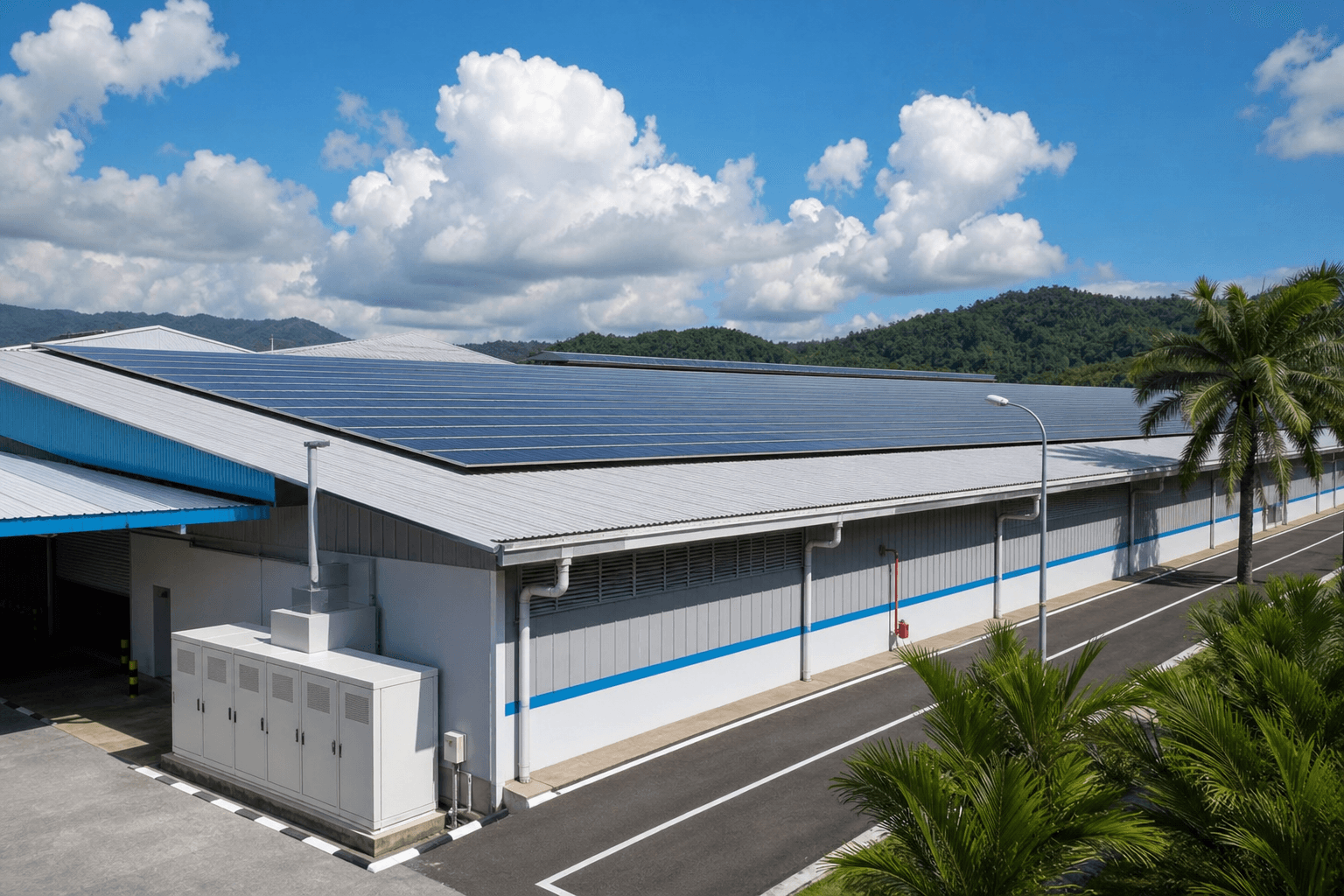
Your peak demand is increasing your electricity bill
For many commercial and industrial users, electricity cost is not only about how much energy is consumed — it is also driven by the highest level of power drawn from the grid during a billing period. This is called maximum demand.
Maximum-demand charges can become a major cost for businesses with heavy electrical loads, especially when equipment runs simultaneously or machinery starts up during production.
What is maximum demand?
Maximum demand is the highest amount of power your business draws from the grid during a measurement period. Even if that high demand lasts only a short time, it can still set your billed maximum demand.
For example, a factory may normally operate at 1,000 kW. But when multiple machines, compressors, chillers or lines run together, demand may spike to 1,500 kW — and that 1,500 kW peak becomes the figure used for billing.
Why maximum demand matters
Reducing peak demand can be as important as reducing consumption. High maximum demand can cause:
Higher monthly bills
Even short demand spikes can raise your billed maximum demand for the whole period.
Poor load management
Uncontrolled start-ups and simultaneous operation create unnecessary demand peaks.
Limited power headroom
High maximum demand reduces the capacity available for future expansion.
Grid & infrastructure stress
Sudden spikes strain transformers, switchgear and electrical infrastructure.
Common causes of demand spikes
Maximum-demand spikes usually happen when large loads operate at the same time:
- Chillers & HVAC systems
- Compressors & motors
- Production line start-up
- Cold storage & refrigeration
- EV charging
- Data-centre loads
- Poor load scheduling
How peak shaving works
The BESS discharges stored energy when your site demand is highest, so the grid sees a lower peak:
- 01
Monitor load demand
The EMS monitors your real-time electricity demand.
- 02
Identify peak periods
As demand approaches a preset threshold, the system responds automatically.
- 03
Discharge battery power
The BESS supports the load, reducing power drawn from the grid.
- 04
Recharge in low demand
The battery recharges during off-peak periods or from available solar.
- 05
Optimise continuously
The EMS tunes performance using load data, solar, tariff and operating patterns.
How much could peak shaving save you?
Set the sliders to match your site — you’ll find both figures on your TNB bill.
The “Maximum Demand” line on your monthly TNB bill.
Your tariff’s maximum-demand / capacity charge — typically RM25–45 per kW for medium-voltage C&I.
Most sites achieve 10–25% depending on load shape — we confirm this from your interval data.
Indicative saving
RM 4,200 / month
Per year
RM 50,400
Over 10 years
RM 504,000
Indicative estimate only — actual savings depend on your load profile, tariff and battery sizing. We model exact numbers from your interval data, free of charge.
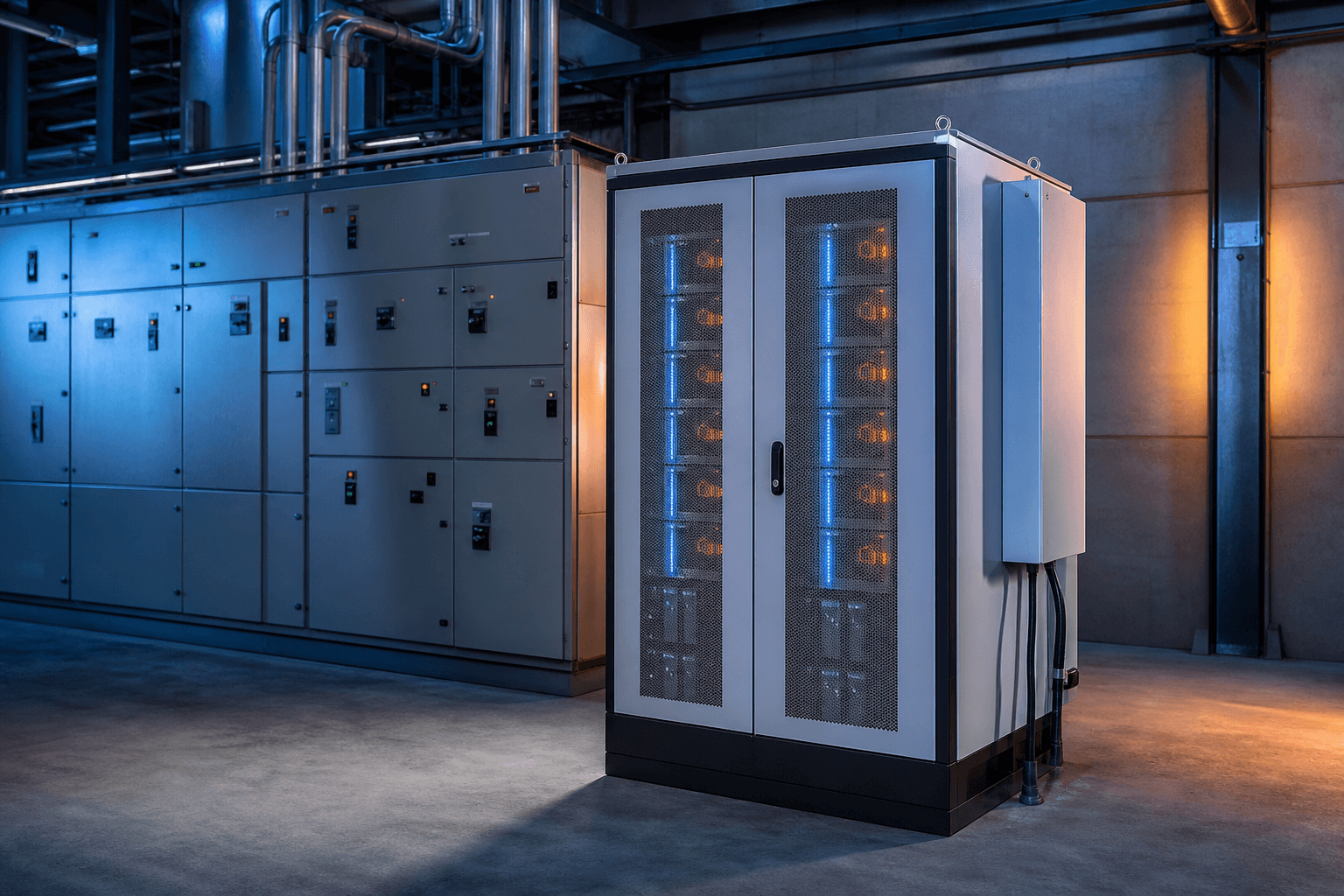
A simple example
Without BESS: a factory operates at 1,200 kW but rises to 1,800 kW during peak production — and the bill reflects the 1,800 kW maximum demand.
With BESS: Solunar designs the system to discharge 400 kW during peaks. When demand hits 1,800 kW, the battery supplies 400 kW, so the grid only sees 1,400 kW — reducing maximum demand and demand-related charges.
Why solar alone may not be enough
Solar PV reduces daytime consumption, but its output depends on weather and sunlight. Peaks can still occur when solar is low, clouds reduce output, equipment starts suddenly, demand peaks after sunset, or load exceeds solar output.
That is why Solar + BESS is more powerful: solar generates clean energy, and the battery controls when that energy is used — for better savings and better energy management.
Solunar's peak shaving solution
We do not simply sell batteries — we design around your actual load profile, bill, operating hours and expansion plan:
Load profile analysis
We analyse your usage pattern and identify maximum-demand spikes.
BESS sizing
We determine the right battery power and capacity for your peak-shaving objective.
PCS integration
We integrate the Power Conversion System for safe, efficient charge/discharge.
EMS control strategy
We design the Energy Management logic to shave peaks automatically.
Solar integration
We integrate existing or future solar PV to deepen savings.
Monitoring & O&M
We provide monitoring, maintenance and performance optimisation after install.
Key benefits
Maximum-demand peak shaving turns your energy system into a smarter business asset:
- Reduce electricity bills by lowering peak grid draw
- Improve energy cost predictability
- Increase power headroom for expansion
- Improve solar ROI by storing and shifting energy
- Reduce grid dependency during high-load periods
- Support ESG goals and cleaner energy integration
Actual savings depend on site load profile, tariff structure, battery size and operating strategy. Solunar models this per site rather than promising a fixed figure.
Frequently Asked Questions
Savings depend entirely on load profile, tariff structure, battery size and EMS strategy. Solunar reviews your bill and interval load data to estimate savings, system size and payback per site.
No. The EMS supports load automatically during peaks and recharges off-peak, so production continues normally while the grid sees a lower demand peak.
Typically your electricity bill and half-hourly (interval) load data, plus operating hours and any expansion plans. From this we size the BESS and model savings.
Want to reduce your maximum demand charges?
Solunar can review your electricity bill, load profile and BESS feasibility. Before your next demand spike becomes another expensive bill, talk to our team.
Get your project numbers before you commit
Send us your electricity bill, load profile or project brief — we’ll model the savings, system sizing and payback from your real data, at no cost.
- 01
Send your details
Share your electricity bill, load profile or project brief — whatever you have today.
- 02
We model the numbers
Savings, sizing and payback are modelled from your real data by our engineers.
- 03
Review on a short call
A 30-minute call to walk through feasibility, options and sensible next steps.
Request your free assessment
Takes 30 seconds — no commitment.