How Solar and Battery Storage Work Together
Solar panels generate electricity from sunlight and battery storage stores it for later — so a business can store excess solar energy and use it when needed instead of only at the moment it is generated.
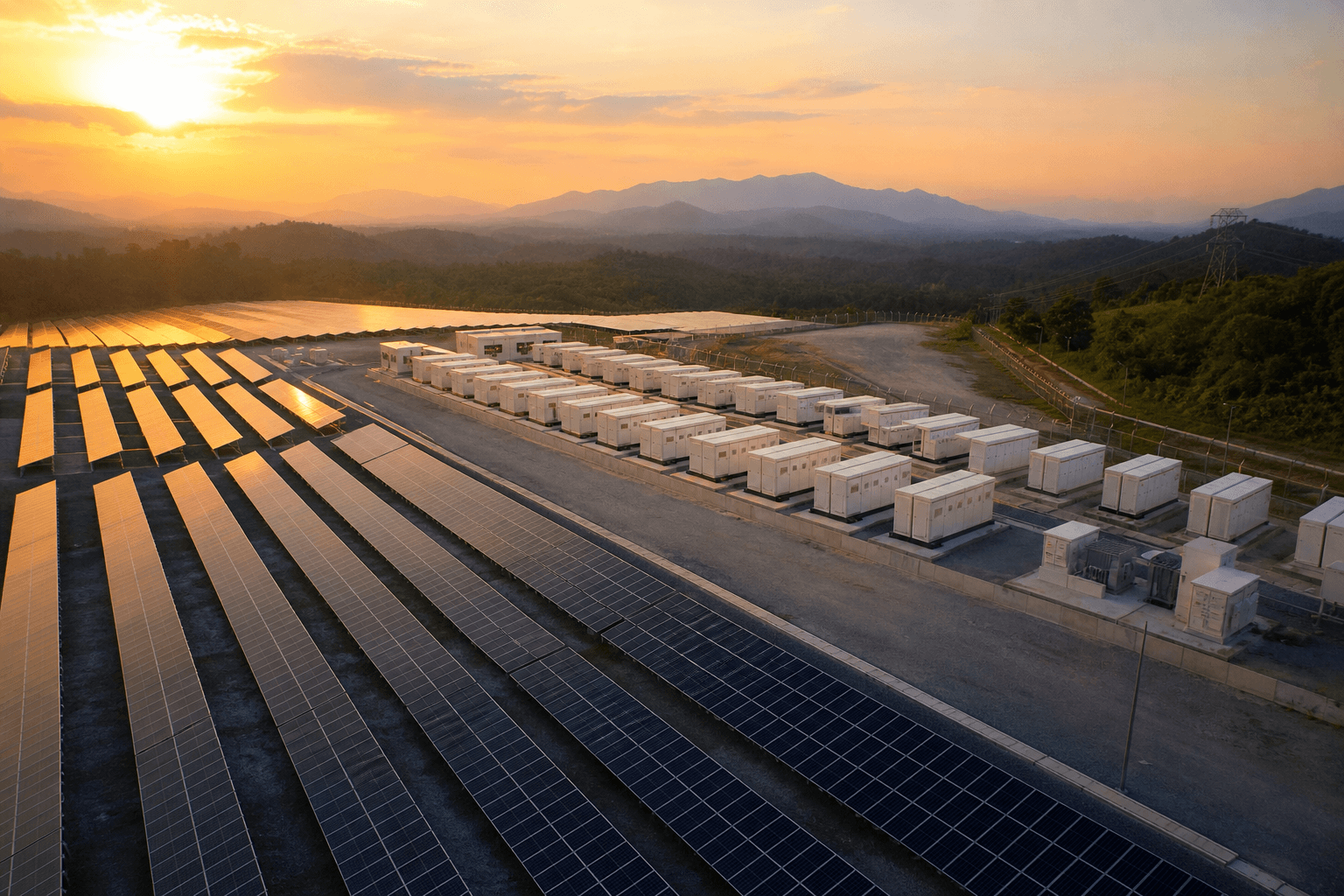
Step 1: Solar panels generate electricity
During the day, solar PV converts sunlight into electricity that can be used immediately. If daytime demand is high, most is consumed directly; if generation exceeds demand, there is excess solar that — without storage — may be exported, curtailed or underutilised.
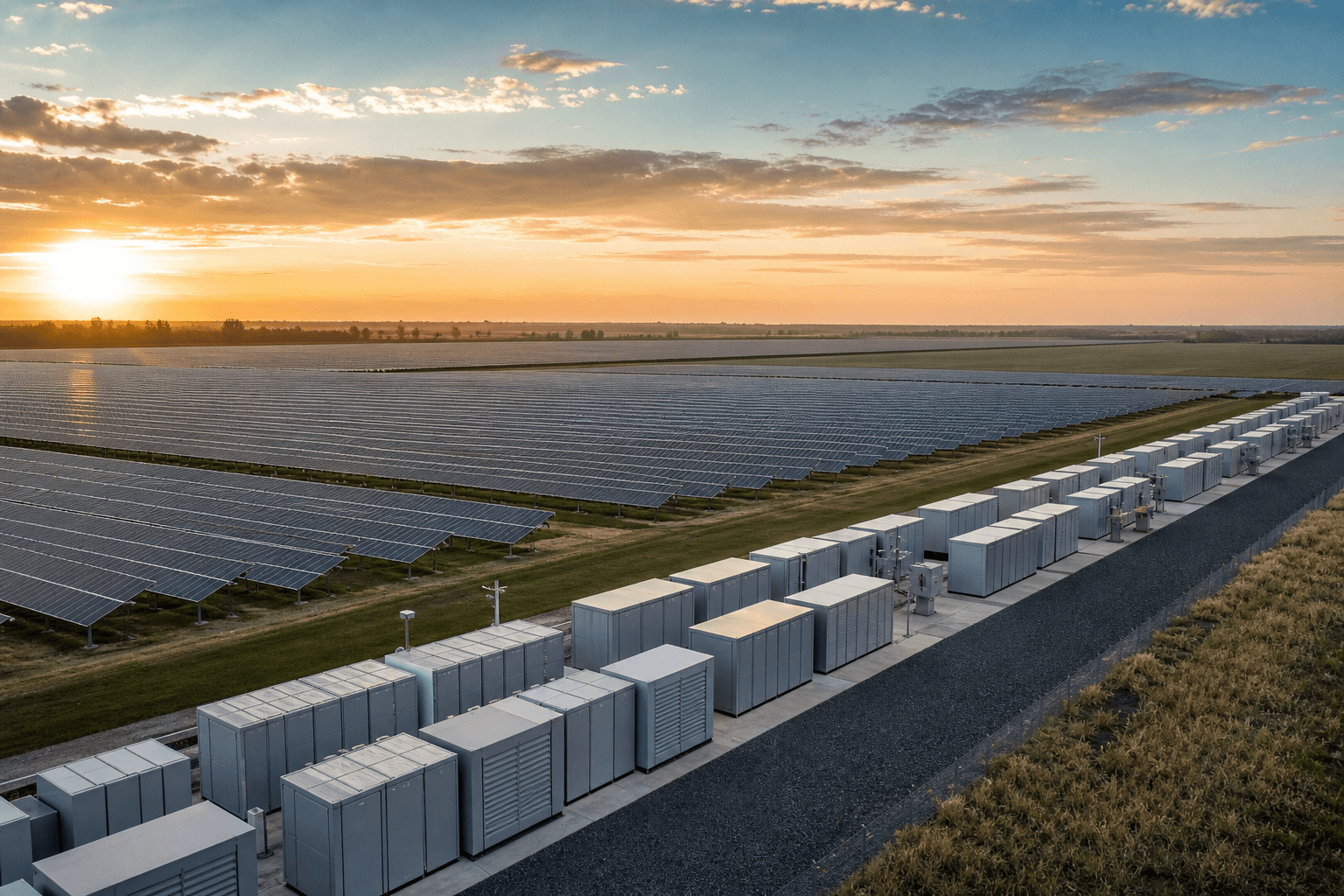
Step 2: Excess solar charges the battery
When generation exceeds immediate consumption, the excess charges the battery, and the BESS stores it for later. Instead of exporting at a lower value, the business can use the stored solar energy during peak demand or non-solar hours.
Step 3: The EMS controls charging and discharging
The EMS is the brain of the system, and can be programmed to:
- Charge the battery using excess solar energy
- Discharge during maximum demand peaks
- Discharge during evening operating hours
- Maintain reserve energy for selected backup needs
- Avoid unnecessary battery cycling
- Optimise savings based on the site’s load profile
Step 4: The battery discharges when needed
When the site needs electricity, the BESS discharges stored energy — when solar drops, demand increases, a peak approaches, the business operates in the evening, or grid power is expensive. The stored solar energy reduces grid consumption and manages demand.
Solar reduces energy charges; BESS reduces demand peaks
Solar helps reduce total electricity imported (kWh), while BESS helps control when electricity is used and how much power is drawn at the peak (kW). For C&I users this matters because bills include both energy charges and maximum demand charges — together they create a stronger saving strategy. Proper battery sizing, based on the site’s real energy behaviour, is essential.
Frequently Asked Questions
Yes. Excess electricity generated by solar panels can charge a battery energy storage system.
Yes. Battery storage can also work with grid electricity, but combining it with solar improves renewable usage.
Yes — when properly designed, it can reduce bills by improving solar usage and reducing peak demand.
The Energy Management System controls charging, discharging and energy optimisation.
Related reading
Keep exploring — more from the Solunar Knowledge Centre:
Have a Solar + BESS project to discuss?
Solunar supports EPCC companies, developers and asset owners with technology, integration and O&M.