Power Expansion with BESS Without Major Grid Upgrade
When a business needs more power than its grid connection allows, a BESS can supply additional peak power on demand — supporting expansion while a longer-term grid upgrade is planned.
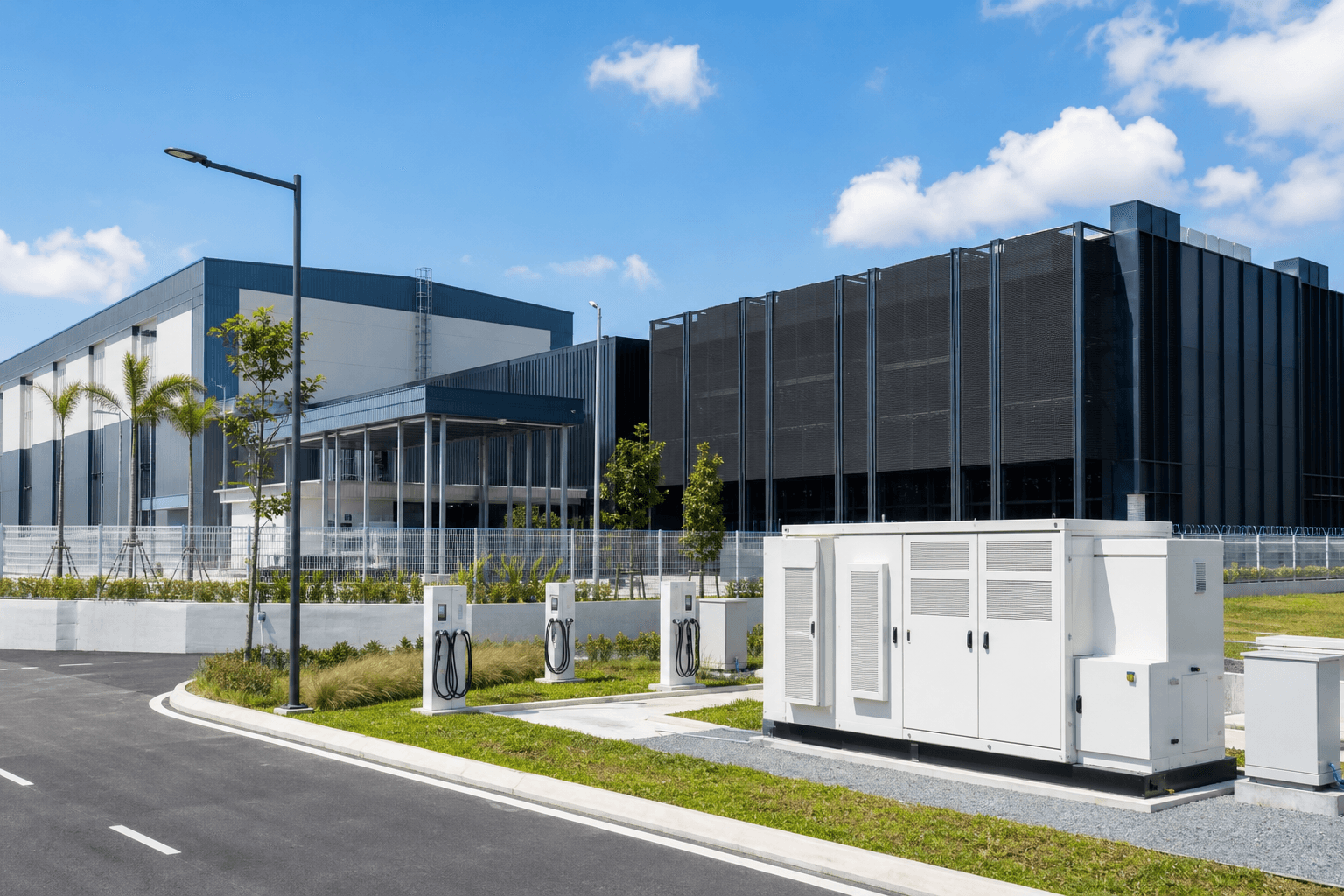
Why power expansion is difficult
Business growth needs more electricity, but grid capacity may be limited by:
- Existing transformer and incoming-supply capacity
- Substation and cable constraints
- Approval timelines and utility upgrade requirements
- High infrastructure cost
- Site space limitations and project delay risk
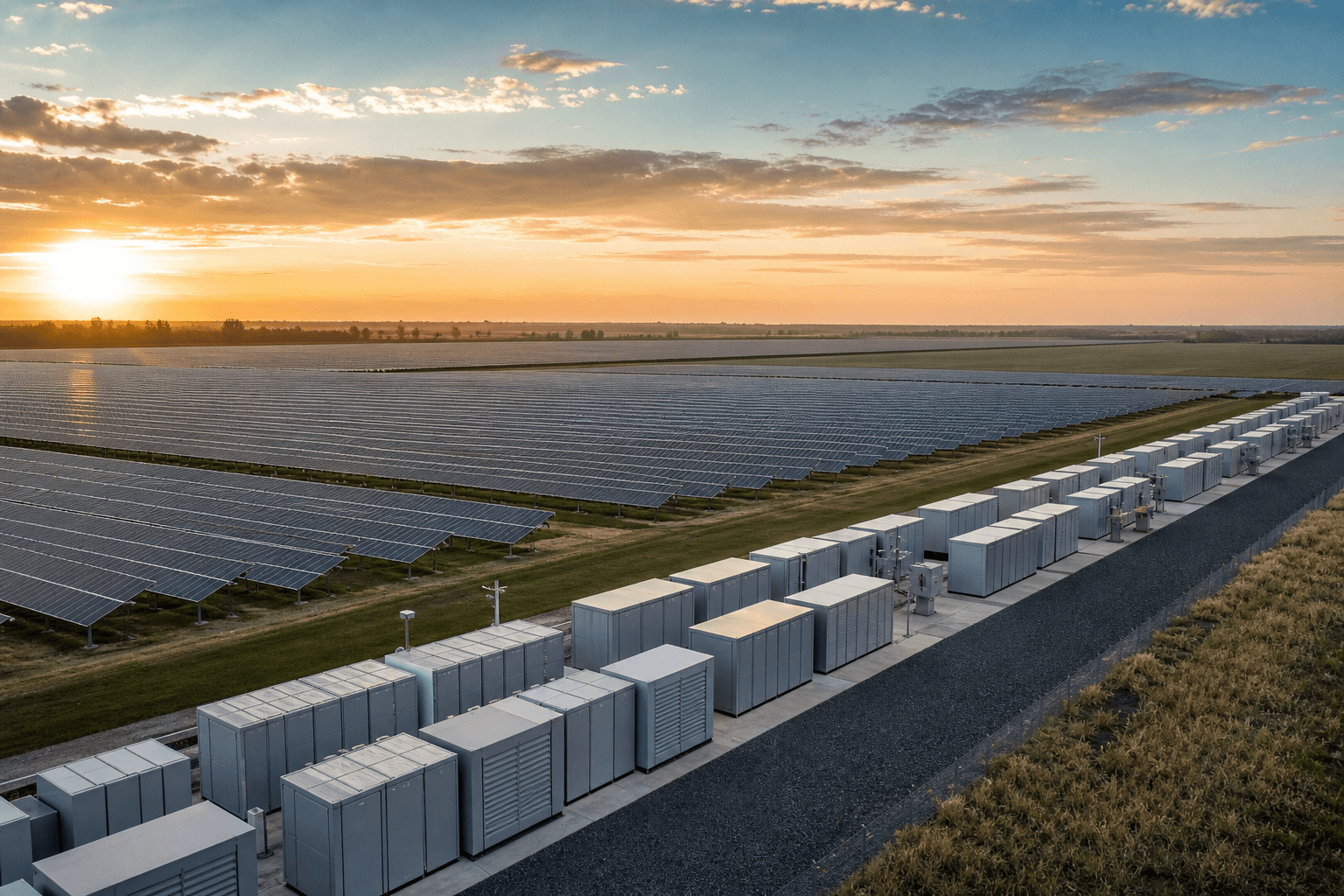
How BESS supports power expansion
BESS charges during lower-demand periods or from solar, then discharges when site demand exceeds the desired grid limit. This reduces the peak power drawn from the grid — helping the site manage additional load without always pulling the full amount from the grid.
A worked example
A factory has 1,500 kW of grid capacity and wants to add equipment that pushes peak demand to 1,900 kW. Instead of immediately upgrading, it installs a BESS that discharges 400 kW during peaks — supporting the extra load while keeping grid demand closer to the existing capacity and reducing pressure on the electrical infrastructure.
A peak support system
BESS is especially useful when the extra power is needed only during short peaks — common in:
- Factories with machine start-up peaks
- Cold storage with compressor cycles
- Commercial buildings with air-conditioning peaks
- EV charging sites with charging spikes
- Data centres in expansion phases
- Warehouses with operational load peaks
Important limitations
BESS is not always a complete substitute for grid upgrades. If a business needs continuous additional power for long hours, a grid upgrade may still be required. BESS is most effective when the problem is peak demand, short-duration overload or timing mismatch — and the EMS must be configured to keep grid demand below the target level. A proper engineering study determines whether BESS can support the site’s expansion needs.
Frequently Asked Questions
Sometimes BESS can delay or reduce the need for a grid upgrade, especially when the issue is peak demand. It depends on the site’s load requirement.
BESS discharges stored energy during peak periods to reduce the power drawn from the grid.
Yes. BESS can help manage peak demand from EV chargers and reduce pressure on the grid connection.
Current grid capacity, load profile, future equipment demand and peak duration are needed.
Related reading
Keep exploring — more from the Solunar Knowledge Centre:
Have a Solar + BESS project to discuss?
Solunar supports EPCC companies, developers and asset owners with technology, integration and O&M.