What Is a BESS (Battery Energy Storage System)?
A Battery Energy Storage System (BESS) is an integrated system that stores electrical energy in batteries and discharges it when needed, controlling when and how power is used across a site or grid.
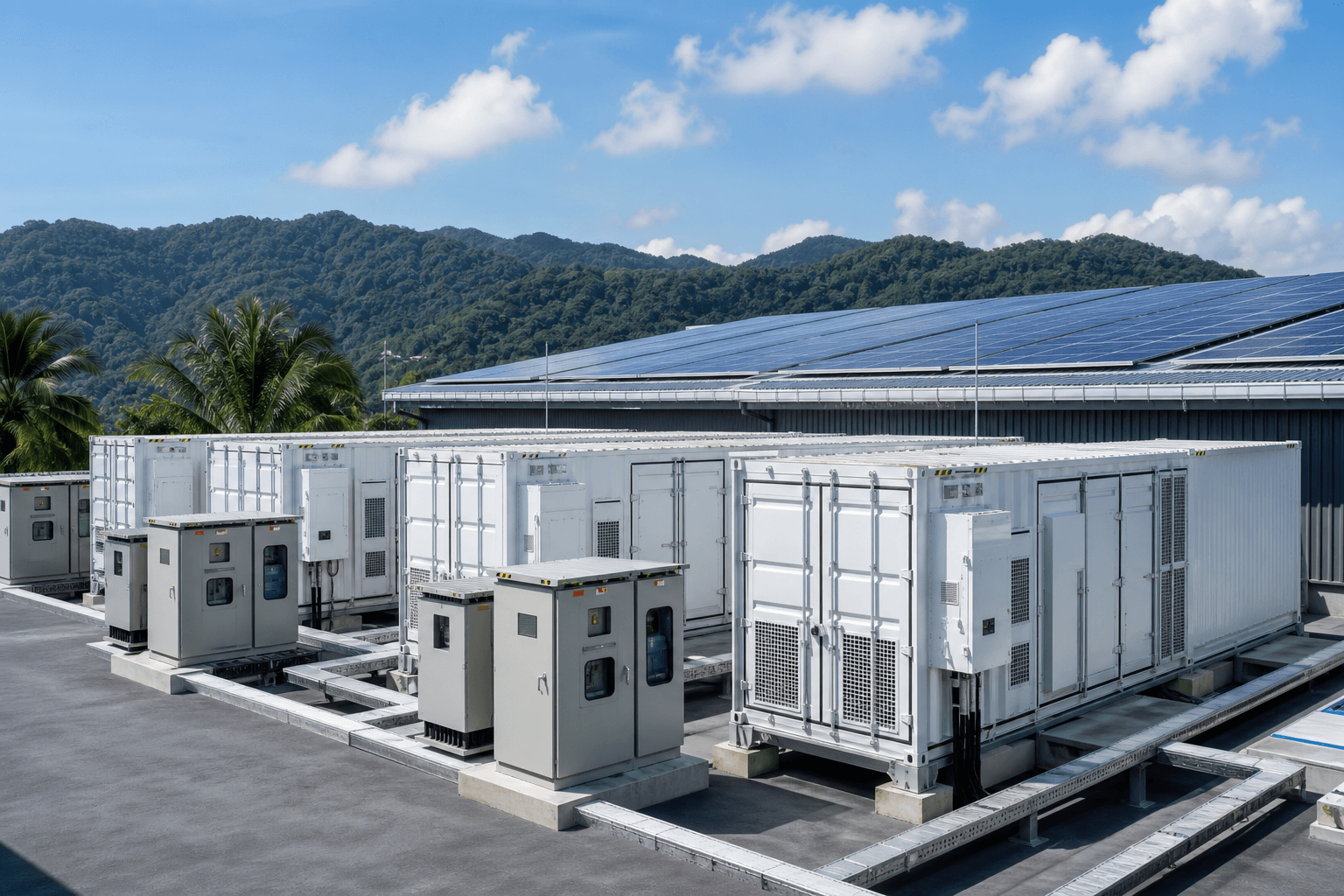
What does a BESS actually do?
A BESS captures electricity — from the grid or from solar — when it is cheap, abundant or surplus, and releases it later when it is expensive, scarce or needed most. In other words, solar is about generation, while a BESS is about control.
That control unlocks several jobs from one asset: maximum-demand peak shaving, load shifting, solar self-consumption, backup power, power expansion and grid support. The same battery can serve different roles depending on how the Energy Management System is configured.
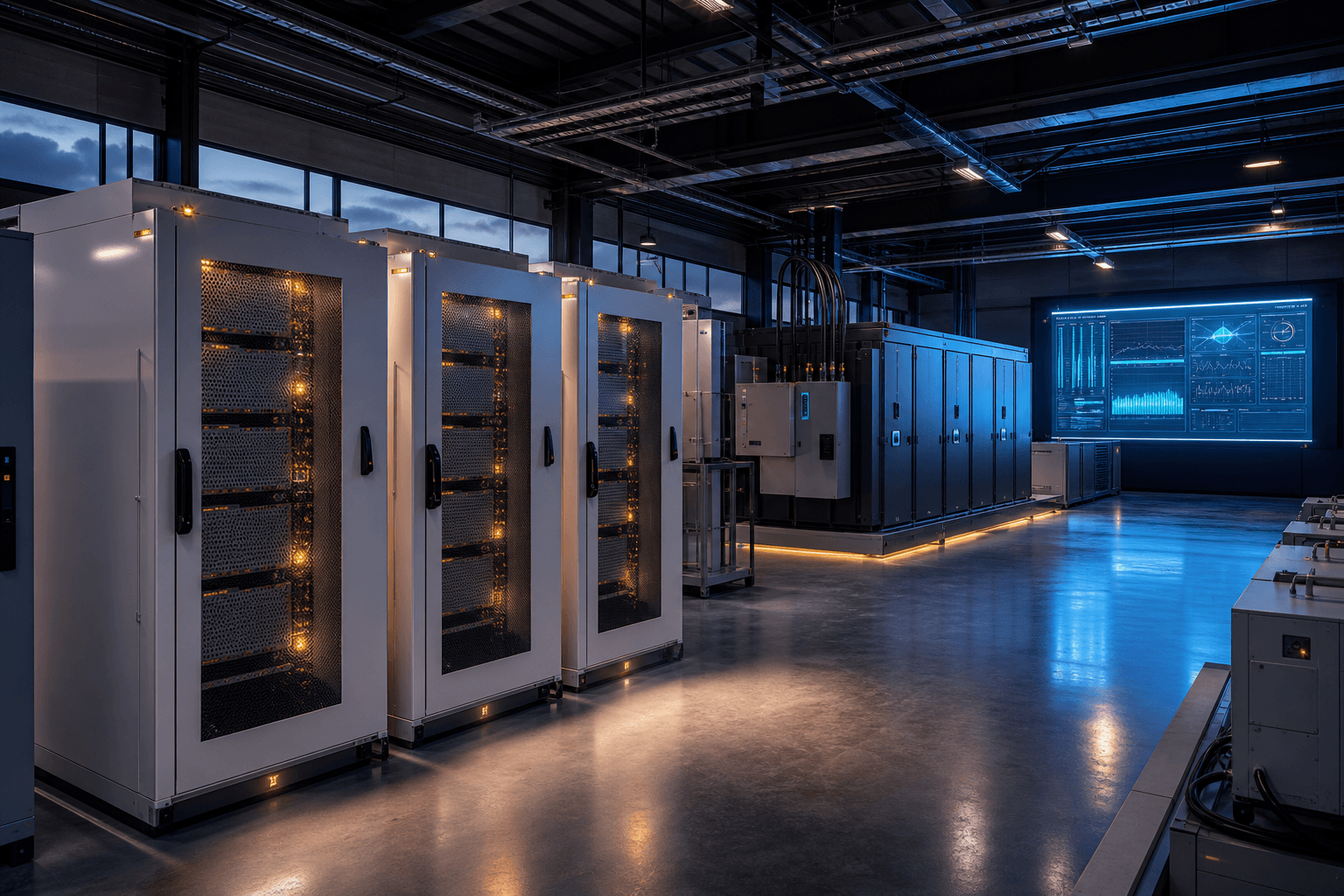
What are the main components of a BESS?
A BESS is far more than a battery. A complete system brings together the battery cells and racks, a Battery Management System (BMS), a Power Conversion System (PCS), an Energy Management System (EMS), thermal management and cooling, fire detection and suppression, protection and metering, monitoring, and an enclosure or container.
The performance and safety of the whole system depend on how well these parts are integrated — which is why specialist integration matters as much as the battery brand.
How is a BESS different from solar?
Solar PV generates energy when the sun is shining; a BESS stores and dispatches energy on demand, day or night. They are complementary: a Solar + BESS system generates clean energy and then controls exactly when that energy is used, which is far more valuable than generation alone.
Why does BESS matter in Malaysia?
Malaysia's commercial and industrial users face rising maximum-demand charges, fast-growing solar adoption, grid-capacity constraints and a growing need for energy resilience. BESS addresses all four — which is why it is becoming a core infrastructure layer rather than an optional add-on.
A BESS typically combines several components:
- Battery cells and racks
- BMS (Battery Management System)
- PCS (Power Conversion System)
- EMS (Energy Management System)
- Thermal management & fire safety
- Monitoring & protection
Frequently Asked Questions
No. Solar generates energy; a BESS stores and controls it. They are often combined in a Solar + BESS system, but a battery adds control, safety and software that solar alone does not require.
Modern LFP systems are typically designed for many thousands of cycles over a 10–15 year horizon, with capacity gradually degrading. Actual life depends on chemistry, depth of discharge, temperature and how the system is operated and maintained.
A well-designed BESS uses a safety-focused chemistry (such as LFP), a robust BMS, thermal management and fire detection and suppression. Site safety depends on the full system design and integration, not the battery alone.
Related reading
Keep exploring — more from the Solunar Knowledge Centre:
Have a Solar + BESS project to discuss?
Solunar supports EPCC companies, developers and asset owners with technology, integration and O&M.